
Coaching AgileBrain
Integrating AgileBrain into the Coaching Cycle
AgileBrain is an invaluable tool throughout the coaching cycle. Using a standard coaching framework, like the one below, we have illustrated specific ways you can integrate AgileBrain in your practice.
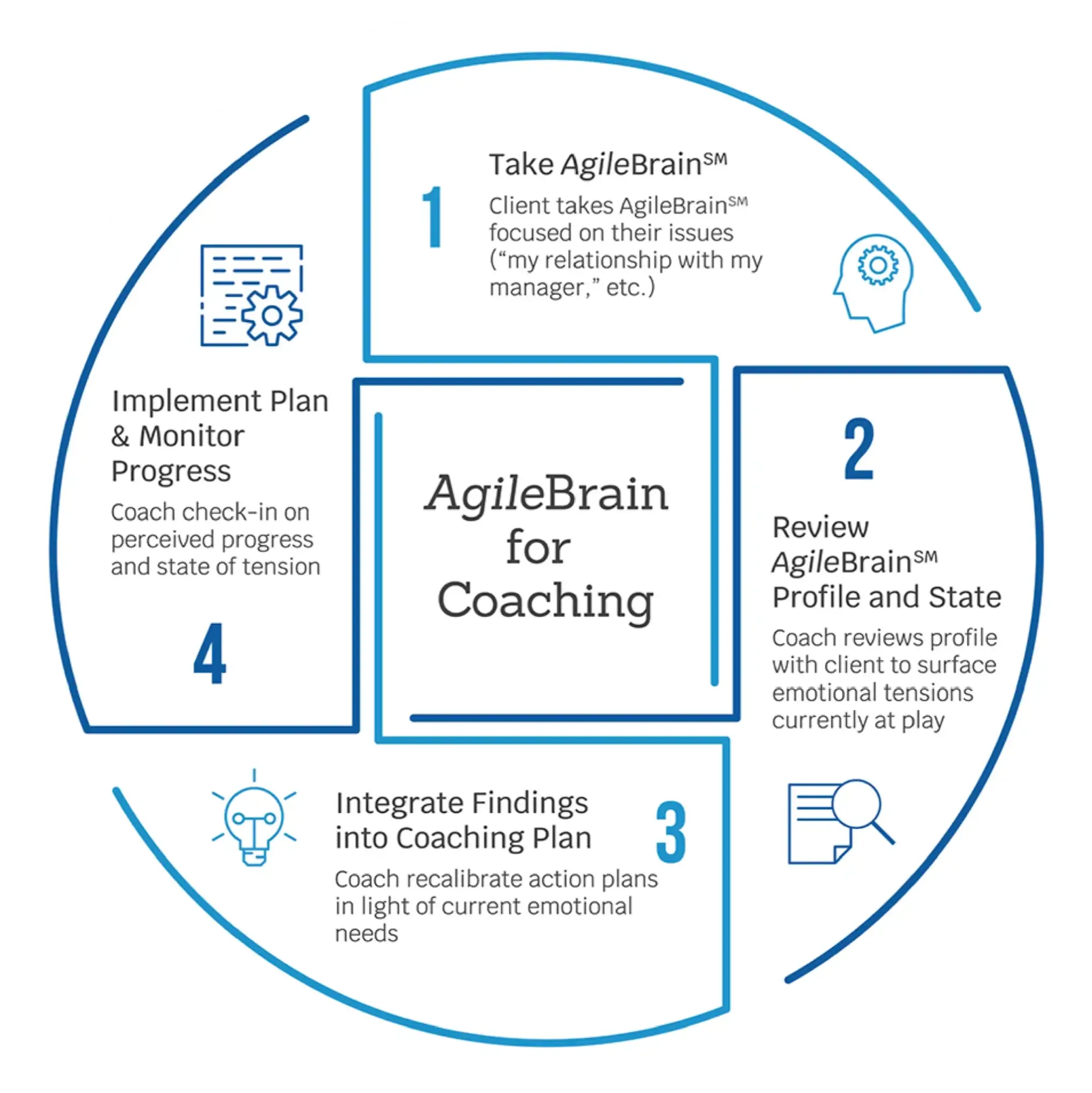
1. Take AgileBrain
Coaches find a variety of use cases and occasions to use AgileBrain with their clients (see use cases). Because of the limited conscious access people have to their emotional processes, combined with tendencies to try to manage the impressions they give, AgileBrain is a great tool for getting ”below the surface”, delivering solid data on what drives them — what they truly value.
2. Review AgileBrain Results (Profile and State)
The client’s AgileBrain profile pinpoints areas of emotional stability and activation. The client’s AgileBrain 10 States* assignment provides you, the coach, with a quick snapshot of their emotional well-being, as well as a series of followup questions to help you probe their current emotional state. Reviewing the AgileBrain profile and guiding them through a caring exploration of their unsettled emotional needs areas can prompt powerful discussions and help focus your client’s energies on unmet needs that may be blocking positive change.
Tip: Review the Interpreting AgileBrain Results video with your client before the debrief.
*Note: Don’t share the client’s AgileBrain 10 States assignment; use it to prepare for the debrief.
3. Integrate Findings into Coaching Plan
AgileBrain insights can inform development of a new coaching plan or recalibration of an existing plan. By understanding those specific feelings your client wants to feel more, and those they want to feel less, you are in a strong position to construct highly rewarding, intrinsically motivating plans.
Tip: Consider AgileBrain check-ins when your client’s emotional state seems activated.
4. Implement Plan & Monitor Progress
At the conclusion of each coaching cycle, clients can re-take the AgileBrain exercise to see if the targets of emotional fulfillment have changed over the prior period that they have been making strides. It is often the case that as foundational needs are met (e.g., for Safety, Autonomy, Inclusion, and Justice), higher-order needs become relevant. It is often the case that as Material and Self needs are met, Social and Spiritual needs become increasingly relevant.
Tip: Draw connections between the concrete steps clients have made and the emotional fulfillment they seek.