The Ten States
A Rich Profile
The Ten States were created empirically, using well-established statistical tools, to distill thousands of AgileBrain® profiles into a set of highly differentiated segments, different from each other in meaningful ways.
LIS supplemented the AgileBrain data with a wide range of standard psychological inventories, including the “Big Five” (the foundation of MBTI, DiSC, and Enneagram), Strengths/Talents assessment, Holland Occupational Personalities, Emotional Intelligence Scale, Rokeach Values Survey, Locus of Control, Perceived Stress Scale, Brief COPE assessment of coping styles, Imposter Syndrome scale, UCLA Loneliness Scale, the Center for Epidemiological Studies Depression Scale, Self-Actualization and Self-Transcendence scales, a series of well-being indicators, and full range of demographics.
Significantly, the data was also enriched with a full set of Acxiom data, from activities and home ownership to P$YCLE and Personicx. This cross-assessment analysis means that the Ten States can be understood from a complete 360-degree psychological perspective.
Close examination of a client’s AgileBrain® Profile and State offers many benefits to clients and agencies alike. The richness of the information can shed light on your customers and prospects:
- Areas of hidden conflicts or blocked desires
- Degree of emotional openness or reticence
- Intensity of their emotional needs and valence (negative or positive)
- Levels of conscientiousness, agreeableness or insecurity
- Strengths, sense of self-efficacy, and locus of control
These characteristics go well beyond the “nice to know” for strategic marketers, with direct implications for:
- How prospect and customers might best be engaged
- The messages, themes, and benefits that will best resonate
- The motivational energies that can best impel them toward happier, more fulfilled lives
The description of each state ends with these kinds of tips and suggestions to maximize the effectiveness of your points of contact.
Working with Clients
The Ten AgileBrain States by Need Strength and Valence
Each state represents a meaningful share of the adult population, and each state varies meaningfully in terms of emotional needs. The ten states are summarized in the chart below.
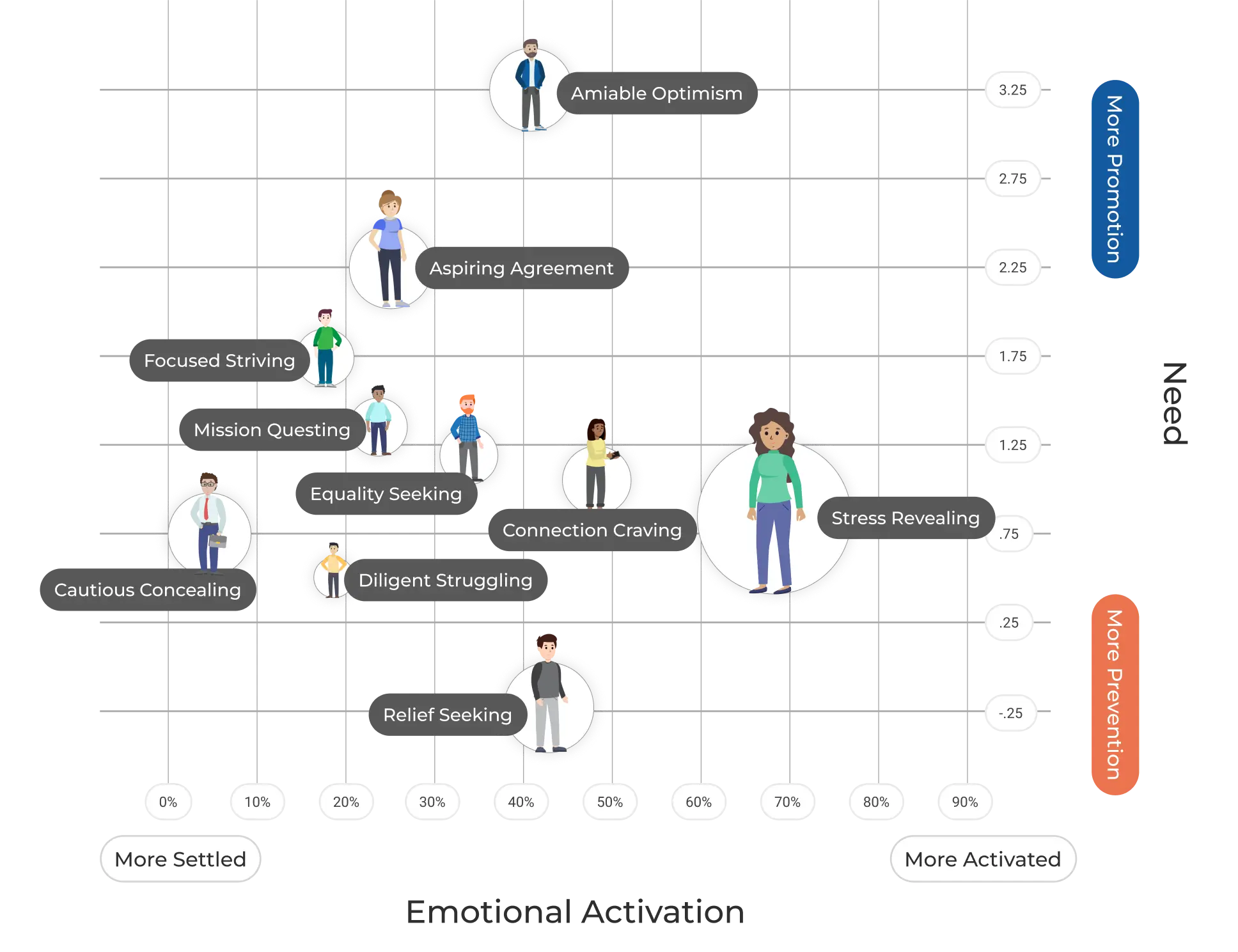
Distinctive Sets of Emotional Needs
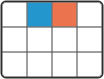
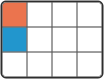
The chart above shows the distinctive patterns of emotional needs associated with each of the Ten States. These “semaphore flags” represent patterns of activation of positive promotion motivation (blue) and negative prevention motivation (orange). The “lit up” cells correspond to the AgileBrain® matrix, the revolutionary model of human emotional needs based on the first principles of four life domains and three levels of aspiration.

Cautious Concealing
Want MORE: Success
Want LESS: Scorn

Diligent Struggling
Want MORE: Authenticity
Want LESS: Limitation

Stress Revealing
Want MORE: Potential, Inclusion
Want LESS: Scorn, Unethical, Materialism, Disempowerment, Injustice
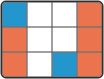

Connection Craving
Want MORE: Inclusion, Caring, Recognition, Success, Potential
Want LESS: Insecurity, Disempowerment
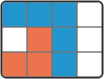
Relief Seeking
Want MORE: None
motivation is driven by relief from negative emotions
Want LESS: Insecurity, Inauthenticity, Limitation, Exclusion, Scorn, Materialism
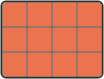

Amiable Optimism
Want MORE: Safety, Potential, Autonomy, Immersion, Success, Inclusion, Caring, Recognition, Justice, Ethics, Purpose
Want LESS: None
motivation is driven by aspiration for positive emotions only
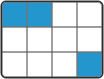
Aspiring Agreement
Want MORE: Success, Inclusion, Recognition
Want LESS: None
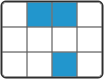

Mission Questing
Want MORE: Justice, Ethics, Purpose
Want LESS: Materialism
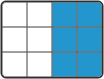
Equality Seeking
Want MORE: Justice, Inclusion, Recognition
Want LESS: Uncaring, Limitation, Disempowerment
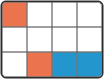

Focused Striving
Want MORE: Safety, Potential
Want LESS: None