How AgileBrain Transforms Leadership Effectiveness Understanding Leadership in Today’s Complex World
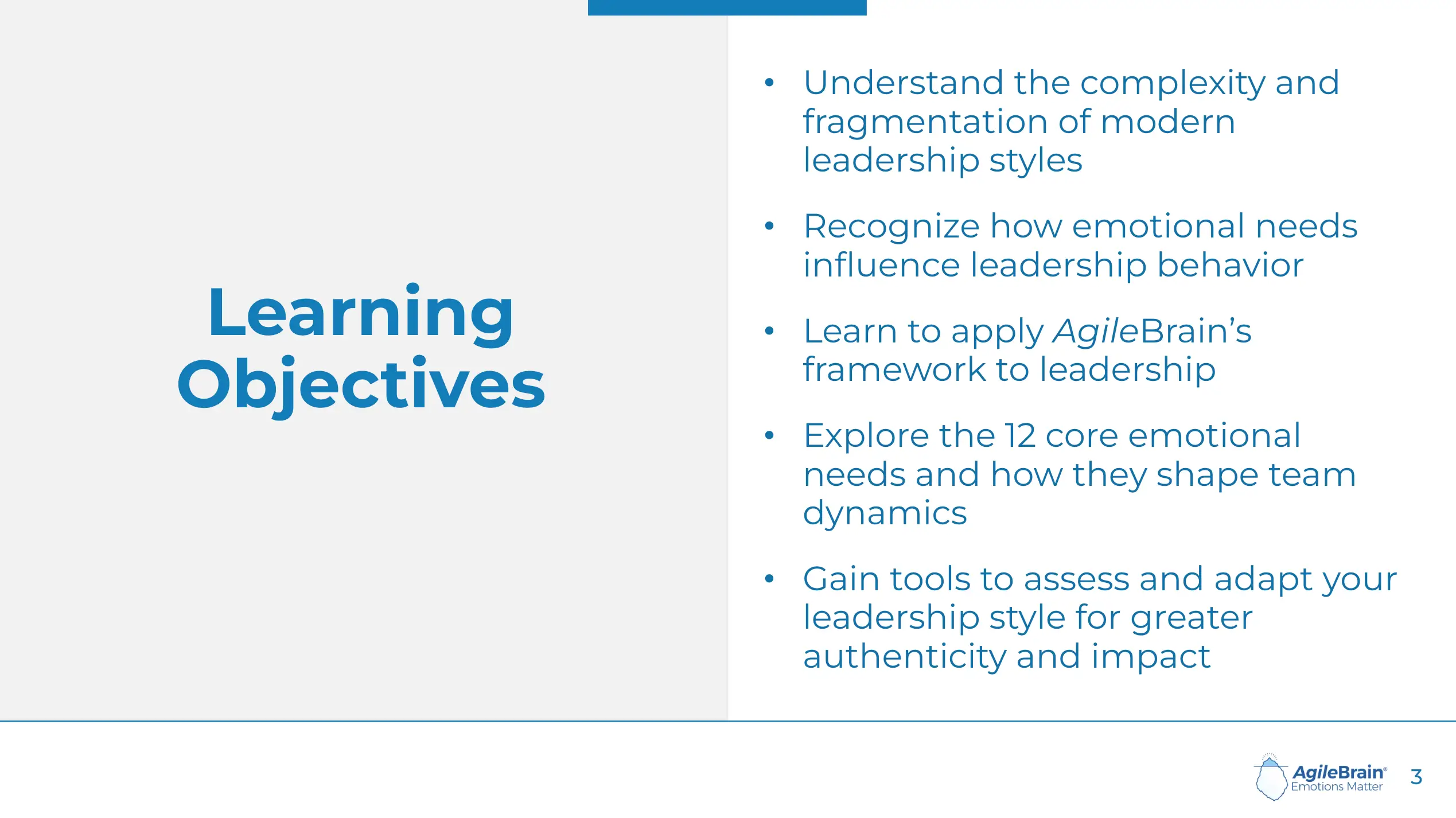
Explore how AgileBrain’s needs-based emotional framework offers that unifying theory, grounding leadership in the emotional needs of followers and positioning emotional insight as the cornerstone of leadership effectiveness.



HOST: Welcome to the discussion, everyone. Today we’re diving into, um, the fascinating world of AgileBrain and how it, uh, revolutionizes leadership. It promises to solve the age-old problem of leadership style fragmentation. Intrigued?
GUEST: Absolutely. The sheer number of leadership models out there is, uh, overwhelming, isn’t it? It’s like trying to choose a flavor of ice cream with a thousand options – you’re paralyzed by choice.
HOST: Exactly! So many leaders feel lost, constantly switching styles, and leaving their teams confused. AgileBrain offers a different approach, doesn’t it?
GUEST: It does. It focuses on understanding the emotional needs of both the leader and the team, providing a unifying framework.
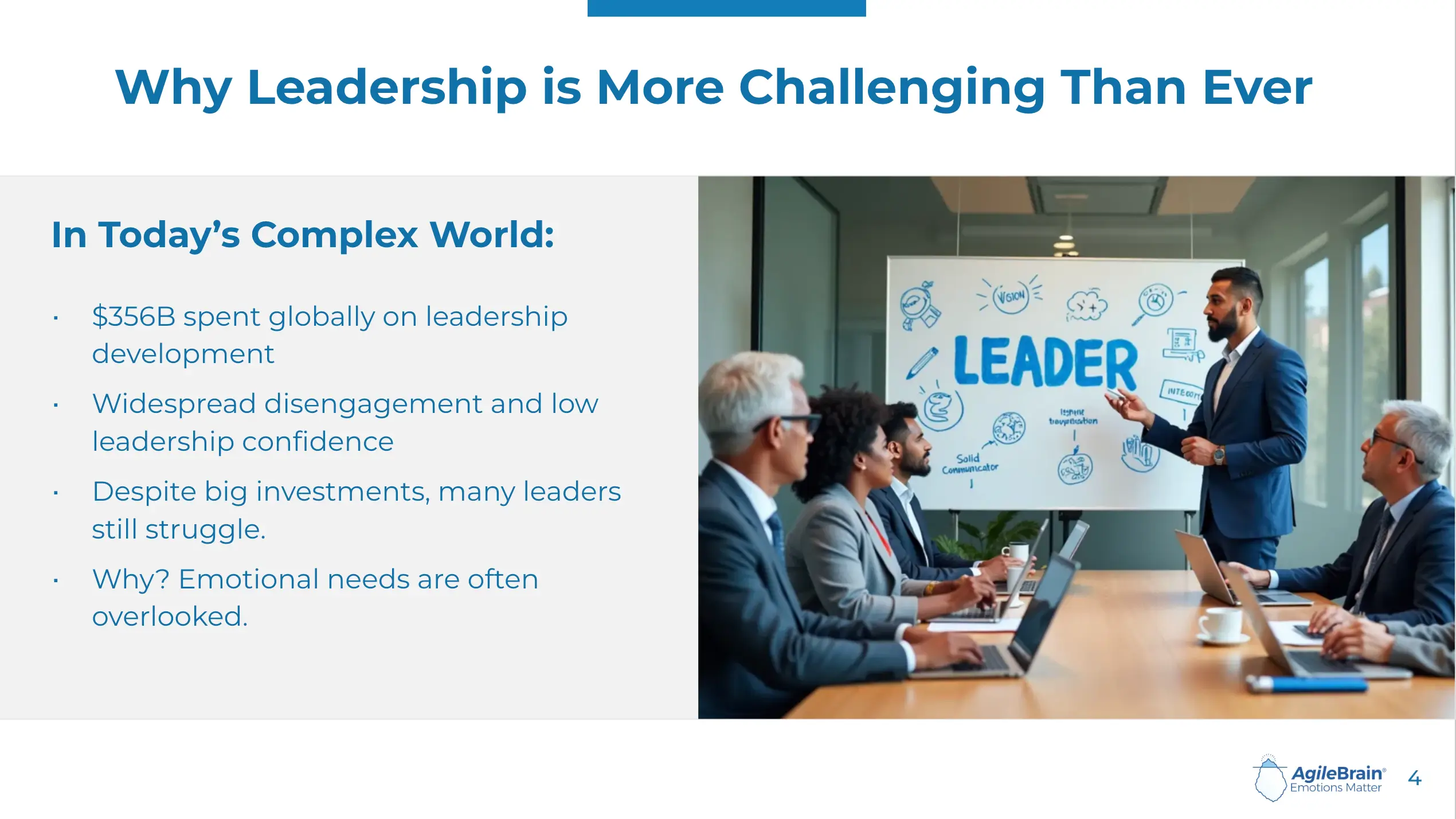
HOST: So, instead of focusing on which leadership style to use, it’s about understanding why you’re choosing a certain style, and if that style is actually meeting the needs of your team. Right? Let’s talk about the challenges of authentic leadership in today’s complex world. It seems like everyone’s trying to be a “transformational leader,” but what does that even mean?
GUEST: It’s become a buzzword, hasn’t it? Authentic leadership is about being true to yourself, understanding your own emotional needs, and leading from that place of self-awareness. The problem is, many leaders try to emulate what they think authentic leadership should look like, rather than discovering their own authentic style.
HOST: And that leads to inauthenticity, right? Trying to fit a square peg in a round hole.
GUEST: Precisely. It’s exhausting for the leader and confusing for the team.
HOST: So, how does AgileBrain help leaders navigate this, um, minefield of leadership styles?
GUEST: By providing a framework grounded in understanding 12 core emotional needs across four life domains: Self, Material, Social, and Spiritual. These needs operate in either Promotion mode or Prevention mode.
HOST: Can you give us a quick overview of these 12 needs?
GUEST: Certainly. They range from foundational needs like Safety and Autonomy to aspirational needs like Potential and Purpose. Understanding these needs in yourself and your team is key. For example, a leader high in Promotion-Recognition might constantly seek accolades, while a leader high in Prevention-Injustice might be overly focused on fairness, potentially to the detriment of efficiency. Yeah.
HOST: So it’s about balance, right? Finding the sweet spot between your own needs and the needs of your team.
GUEST: Exactly. It’s about emotional intelligence and self-awareness.
HOST: And how does this translate into practical leadership strategies?
GUEST: By understanding these needs, leaders can adapt their approach to better meet the needs of their team. A team needing more Safety might benefit from clear communication and structured workflows, while a team craving Recognition might thrive with public praise and acknowledgment.
HOST: Let’s break down a step-by-step approach to improving leadership effectiveness using AgileBrain.
GUEST: Step one is self-assessment. Leaders need to understand their own emotional drivers through the AgileBrain exercise. This reveals their strongest needs and whether they operate in Promotion or Prevention mode.
HOST: Then what?
GUEST: Step two is reflection. Leaders need to consider how their needs shape their leadership style. Do they overcompensate for unmet needs? How might others perceive their behavior?
HOST: Makes sense. What’s next?
GUEST: Step three is understanding the team’s needs. Through coaching conversations and AgileBrain exercises, leaders can identify what motivates their team members. Are they seeking more autonomy, inclusion, or recognition?
HOST: And then?
GUEST: Step four is adjusting leadership behaviors. Leaders need to adapt their approach to meet the specific needs of their team. For example, provide clear structure for those driven by Security, offer praise for those motivated by Recognition, and encourage ethical discussions for those driven by Purpose.
HOST: And finally?
GUEST: Step five is monitoring, learning, and iterating. Emotional needs shift, so leaders need to regularly check in with themselves and their team to ensure they’re still meeting those needs.
HOST: Let’s delve deeper into the Promotion and Prevention needs. How do these impact leadership?
GUEST: A leader with strong Promotion needs might be highly driven and ambitious, always striving for more. This can be a strength, but it can also lead to burnout or neglecting other important aspects of leadership.
HOST: And Prevention needs?
GUEST: Leaders with strong Prevention needs might be risk-averse and focused on avoiding negative outcomes. This can lead to a more cautious and controlled leadership style, which can be beneficial in certain situations, but it can also stifle innovation and creativity.
HOST: So, it’s all about finding the right balance, understanding the context, and adapting your approach accordingly.
GUEST: Precisely. It’s not about eliminating either Promotion or Prevention, but about understanding how they influence your leadership and making conscious choices to balance them.
HOST: How does AgileBrain ultimately improve leadership effectiveness?
GUEST: By fostering self-awareness, emotional intelligence, and adaptability. Leaders who understand their own needs and the needs of their team are better equipped to create a positive and productive work environment.
HOST: It sounds like it moves leadership beyond just tasks and targets.
GUEST: Absolutely. It’s about building relationships, fostering trust, and creating a sense of belonging. It’s about leading with empathy and understanding.
HOST: So, it’s not just about what you do as a leader, but how you do it, and why.
GUEST: Exactly. It’s about aligning your actions with the emotional needs of your team, creating a more resonant and effective leadership style.
HOST: Let’s say a leader identifies a team member with a high need for Recognition. How would they address that?
GUEST: They could offer public praise, acknowledge their contributions, and provide opportunities for growth and development. It’s about making that team member feel seen, valued, and appreciated.
HOST: And what about a team member with a high need for Autonomy?
GUEST: Empowerment is key. Give them ownership over their work, trust their judgment, and provide them with the resources and support they need to succeed. Avoid micromanagement at all costs.
HOST: It seems like AgileBrain provides a really practical framework for addressing individual needs within a team.
GUEST: It does. It’s about tailoring your leadership style to the specific needs of each individual, creating a more personalized and effective approach.
HOST: Can you tell us more about the AgileBrain exercise itself? How does it work?
GUEST: It’s a self-assessment tool that helps individuals identify their own emotional needs and how they operate in Promotion and Prevention modes. It’s a valuable tool for self-discovery and understanding your own leadership style.
HOST: Is it a lengthy process?
GUEST: No, it’s relatively straightforward and can be completed in a short amount of time. The real value comes from the reflection and application of the results.
HOST: So, it’s not just a one-time thing, but an ongoing process of self-awareness and adaptation. That was a great discussion! Thank you for sharing your insights on how AgileBrain can transform leadership effectiveness. It’s clear that understanding emotional needs is crucial for building strong, productive, and engaged teams.
Training Module Sample