From Stress to Strength: Building Resilience with AgileBrain
Stress is a fact of life.
Whether it’s the pressure of deadlines, relationship challenges, or navigating big life transitions, stress shows up in different forms and intensities.
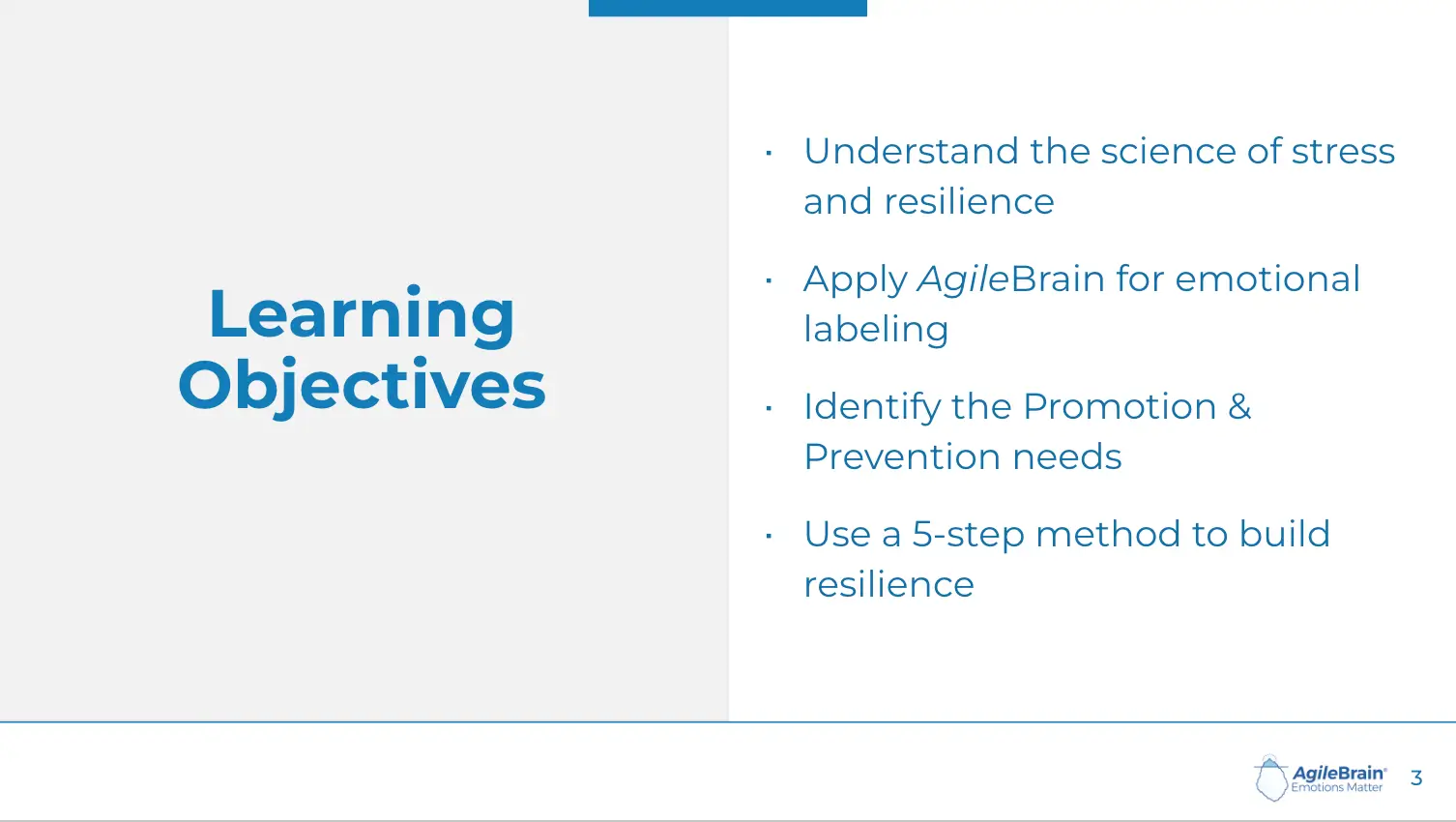
This module will help us explore how to distinguish different types of stress, why it’s crucial to name and understand our emotions in response to stress, and how AgileBrain can help us build lasting resilience.



HOST: Welcome to the discussion, everyone. Today we’re diving into the world of stress management and resilience building, using something called the AgileBrain exercise. Um, it promises to, uh, really transform how we handle life’s inevitable challenges.
GUEST: Exactly. Stress is unavoidable, you know? But suffering from it? That’s totally optional. AgileBrain helps us understand, um, the root causes of our stress responses.
HOST: So, it’s not just about reducing stress, but understanding it? I see.
GUEST: Precisely. It’s about identifying the underlying emotional needs that are being triggered, yeah.
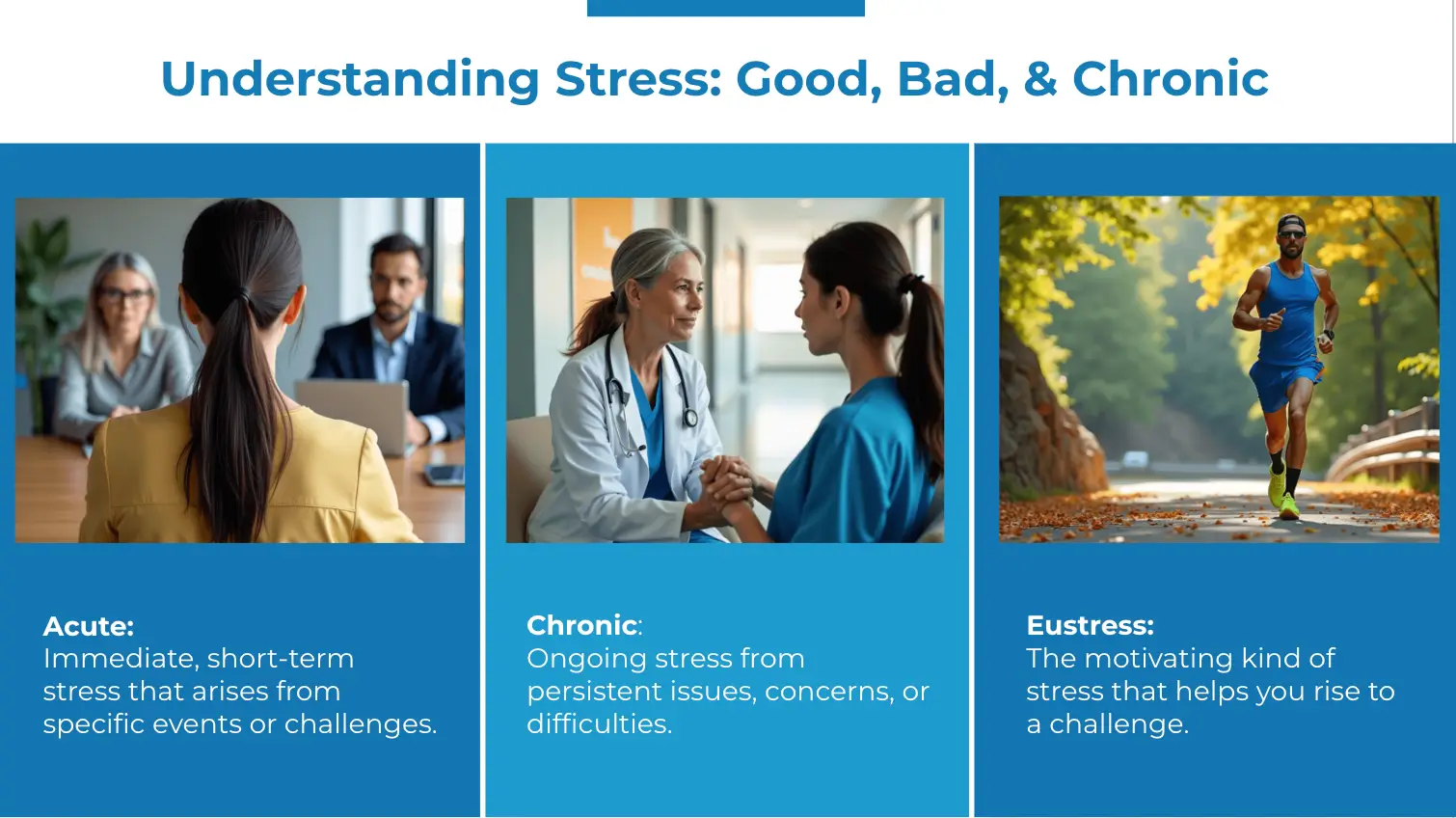
HOST: Intriguing. Let’s explore how AgileBrain helps us pinpoint these needs and build resilience. Okay, let’s start with the different types of stress. You mentioned acute, chronic, and eustress. Can you elaborate a bit?
GUEST: Sure. Acute stress is short-term, like, you know, a deadline at work. Chronic stress is ongoing, like, um, financial worries or relationship problems. And eustress? That’s positive stress, like the excitement of a new project. The key is recognizing which type you’re facing, right?
HOST: So, understanding the type of stress is the first step towards managing it?
GUEST: Absolutely. It allows for a more targeted approach. For example, acute stress might need a quick relaxation technique, while chronic stress might require, um, a longer-term strategy. Makes sense, huh?
HOST: Makes sense. Let’s talk about how naming the emotion plays a role.
GUEST: Yeah, affect labeling is crucial. Naming your emotion—’I’m feeling anxious’—activates the prefrontal cortex, helping regulate the amygdala, the brain’s fear center.
HOST: How does AgileBrain fit into this picture?
GUEST: AgileBrain uses a visual map to identify your emotional state and pinpoint unmet needs. It distinguishes between Promotion needs—like wanting success—and Prevention needs—like avoiding injustice.
HOST: So, Promotion needs are about growth, while Prevention needs are about security? Right?
GUEST: Exactly. Understanding this distinction is key. Stress from pursuing a Promotion goal is different from stress caused by feeling unfairly judged. Totally different.
HOST: Can you give us some real-world examples? Let’s hear some examples of how these needs manifest in daily life.
GUEST: Okay, imagine Amara, a marketing manager excited about a product launch. Her stress is linked to a strong desire for success—a Promotion need. It’s energizing stress, you know?
HOST: And what about a Prevention need example?
GUEST: Liam, for instance. He’s feeling excluded from his partner’s social plans, and he’s experiencing stress linked to a Prevention need—inclusion. This stress is draining and demoralizing. It’s a very different feeling.
HOST: So, AgileBrain helps differentiate between these two types of stress responses?
GUEST: Yes, it helps individuals understand the source of their stress and tailor their response accordingly.
HOST: Let’s talk about resilience. How does AgileBrain help build it?
GUEST: Resilience is about bouncing back from adversity, right? AgileBrain enhances emotional awareness, allowing for more thoughtful responses to stress.
HOST: It’s not about avoiding stress, but managing it effectively?
GUEST: Precisely. It’s about developing emotional agility.
HOST: Can you outline a step-by-step guide on using AgileBrain for resilience building? Let’s break down the process. What’s the first step?
GUEST: Step one: Pause and scan your inner world. Use AgileBrain to identify and name your feelings.
HOST: And step two?
GUEST: Identify the source of the emotion. What triggered it? Was it a conversation, a memory, something else?
HOST: What about step three?
GUEST: Translate the emotion into a need. Is it a Promotion or Prevention need?
HOST: And step four?
GUEST: Choose your response. Resilience is about making conscious, values-aligned decisions.
HOST: And finally, step five?
GUEST: Reflect and rebuild your resilience skills. Learn from your experiences.
HOST: Let’s add some actionable tips to each step. For step one, what would you suggest?
GUEST: Take three minutes daily to check in with AgileBrain, name your top unmet needs.
HOST: Step two?
GUEST: Journal about the event connected to the emotion. Use prompts like “This need might be coming from…”
HOST: Step three?
GUEST: Identify if it’s a Promotion or Prevention need. Ask: What is this feeling trying to tell me?
HOST: Step four?
GUEST: Write down one small step to meet your needs. If you need connection, call a friend. Something small.
HOST: And step five?
GUEST: Use daily AgileBrain check-ins to celebrate small wins and recalibrate.
HOST: So, AgileBrain helps us transform our relationship with stress?
GUEST: Exactly. It’s about treating emotions as valuable data, turning stress into insight.
HOST: It’s about presence, not perfection. That was a great discussion! Thank you so much for sharing your insights on using AgileBrain to build resilience. It was really helpful.
Training Module Sample