Workplace Ethics & Professionalism
In a rapidly changing professional landscape, especially one increasingly shaped by remote work, evolving technology, and diverse teams, understanding workplace ethics and professionalism isn’t optional — it’s essential. Here’s why these principles matter and how they shape the behaviors and expectations between employees and employers.
HOST: Welcome to the discussion, everyone. Today, we’re diving into, um, the fascinating world of AgileBrain and how it can, uh, boost workplace ethics and professionalism. It’s all about understanding your emotional drivers, you know?
GUEST: Exactly. It’s not just about following rules; it’s about understanding why those rules matter to you personally. That’s the key.
HOST: So, it’s about self-awareness leading to better ethical choices? I see.
GUEST: Precisely. AgileBrain helps you identify your emotional needs and how they influence your actions at work. It’s really powerful.
HOST: Intriguing. Let’s explore how this impacts both employee and employer expectations. So, what are some key expectations employees should have of their employers regarding ethics and professionalism?
GUEST: Um, fairness, transparency, respect, support, and clear boundaries are crucial. Employees deserve a work environment that values their contributions and well-being, you know?
HOST: Right. And what happens when those expectations aren’t met? That’s a big one.
GUEST: It can lead to burnout, disengagement, and ultimately, employees seeking opportunities elsewhere. It’s a two-way street, for sure.
HOST: Absolutely. Let’s shift to employer expectations. What are employers looking for in their employees?
GUEST: Integrity, reliability, respect, accountability, and confidentiality are paramount. Employers invest in character, not just resumes. It’s a big deal.
HOST: So, it’s about building trust?
GUEST: Absolutely. Employers want to know you’ll do the right thing, even when no one’s watching. It’s about consistent ethical behavior. That’s the bottom line.
HOST: And how does AgileBrain help employees meet those expectations?
GUEST: By understanding their own emotional needs, employees can better anticipate how they might react in challenging situations and respond more effectively. It’s a game changer.
HOST: Can you give us a practical example of how AgileBrain helps navigate ethical dilemmas?
GUEST: Sure. Imagine Sarah, a new employee who notices a colleague falsifying expense reports. Using AgileBrain, Sarah identifies her strong need for fairness and integrity.
HOST: So, her emotional needs are her ethical compass? That’s interesting.
GUEST: Exactly. This awareness empowers her to report the issue to her manager, not out of fear of reprisal, but because it aligns with her core values. It’s powerful.
HOST: That’s a powerful example. Let’s talk about the five-step process of using AgileBrain to strengthen workplace ethics. Walk us through the five steps.
GUEST: First, identify your emotional anchors – your strongest unmet needs. Second, observe your patterns under pressure. How do you react when your needs aren’t met? It’s all about self-reflection.
HOST: Makes sense. What are steps three and four?
GUEST: Third, align your values with your professional conduct. Let your internal ethics guide your external actions. Fourth, advocate respectfully when expectations aren’t met. It’s about finding your voice.
HOST: And the final step?
GUEST: Fifth, recalibrate when you hit ethical friction. Use AgileBrain to reflect and decide whether to adapt, speak up, or move on. It’s an ongoing process.
HOST: Excellent. How can someone assess a company’s ethical culture before accepting a job?
GUEST: Ask direct questions during interviews, research reviews, study leadership communication, inquire about their code of ethics, and observe cultural signals. Do your homework.
HOST: So, it’s about due diligence before committing to a role?
GUEST: Precisely. It’s about finding a company where your values are respected and supported. It’s crucial.
HOST: What if, despite your best efforts, you find yourself in a workplace where ethical standards are lacking?
GUEST: Even in challenging situations, AgileBrain can help. Observe, learn, seek allies, and find moments of agency. This experience can be a powerful learning opportunity. It’s about growth.
HOST: So, it’s about turning a negative experience into a growth opportunity? I like that.
GUEST: Exactly. It’s about building resilience and self-awareness. You’ll be better equipped for future roles. Absolutely.
HOST: That’s a valuable perspective. Let’s summarize the key takeaways. What are the key takeaways for our listeners?
GUEST: Know your company’s values, build trust through integrity, and expect respect. AgileBrain helps you navigate these complexities with greater self-awareness. It’s all connected.
HOST: So, AgileBrain is a tool for self-discovery and ethical decision-making in the workplace?
GUEST: Precisely. It empowers you to be a more ethical and professional employee, and to advocate for yourself when necessary. It’s empowering.
HOST: And what about the consequences of ethical breaches? What are some of the potential consequences of ethical breaches in the workplace?
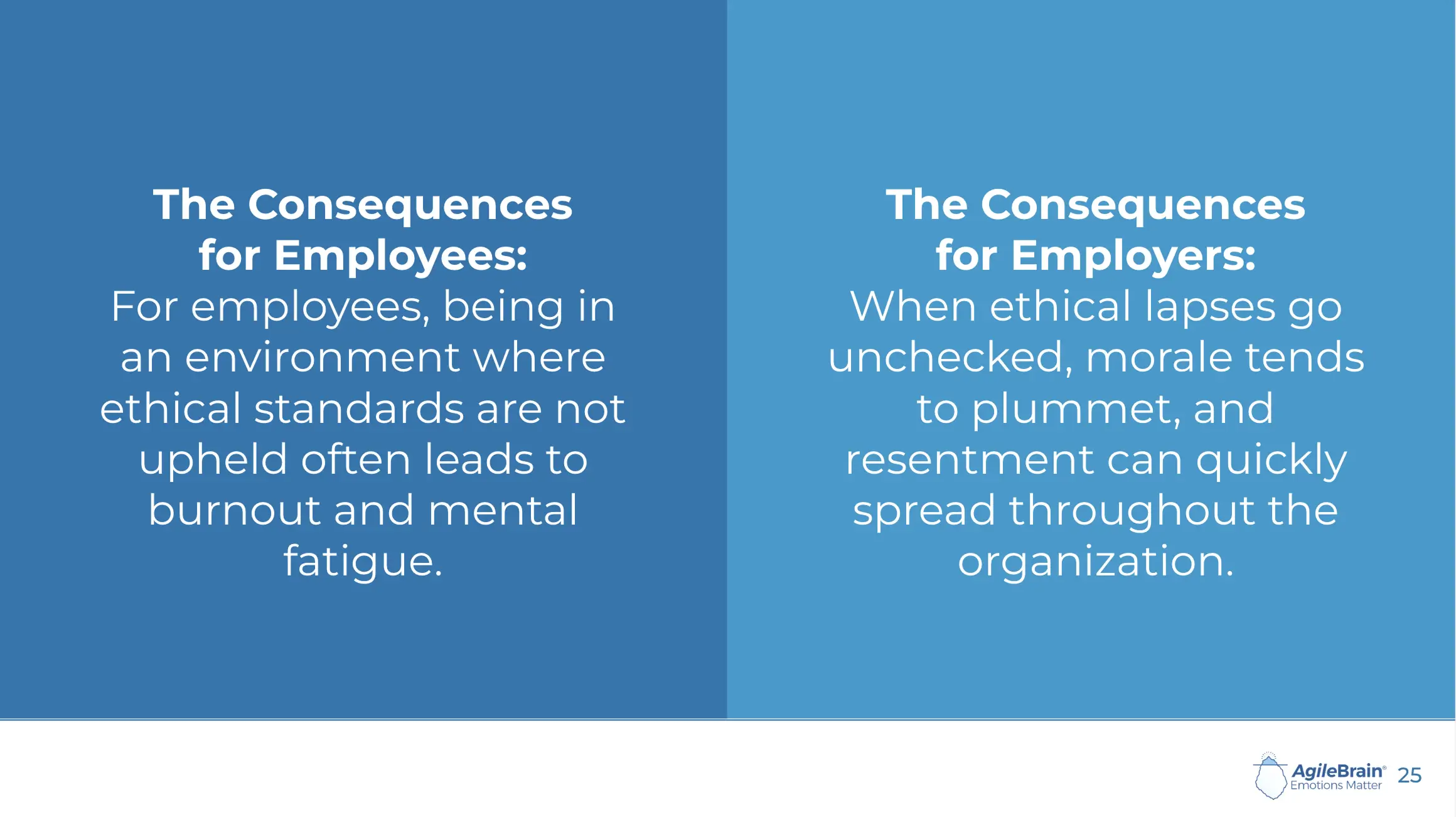
GUEST: For employees, it can lead to burnout, stalled careers, and isolation. For employers, it can damage morale, increase turnover, and expose the company to legal and reputational risks. It’s a serious issue.
HOST: So, ethical behavior benefits both employees and employers?
GUEST: Absolutely. It fosters trust, collaboration, and a positive work environment. It’s a win-win.
HOST: Let’s talk about the benefits of a strong ethical culture. What are the benefits of a strong ethical culture for both employees and employers?
GUEST: For employees, it leads to career growth, job satisfaction, and a sense of pride. For employers, it improves team collaboration, reduces turnover, and protects the company’s reputation. It’s fundamental.
HOST: So, it’s a win-win situation?
GUEST: Definitely. A strong ethical culture is essential for a thriving workplace. No question.
HOST: This has been incredibly insightful. That was a great discussion. Thank you for sharing your expertise on AgileBrain and its role in strengthening workplace ethics and professionalism. I really appreciate it.
Training Module Sample