
Skip to content

Diligent Struggling

Activation

Positivity

Population

Needs
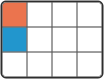
The Diligent Struggling state is marked by a strong desire to express the real self through effort and contribution, constrained by a feeling of being trapped, blocked, or limited.

AgileBrain reveals this as a state where motivation is still present—but increasingly burdened. There’s a voice saying: I want to do this right, I want to be myself, but I can’t break through. Whether the constraints are external (rigid systems, micromanagement) or internal (perfectionism, fear), the emotional load grows heavy.

This state often shows up as overwork, rumination, or quiet frustration. People here are not giving up—they’re trying hard—but feel they must keep going despite being misunderstood, underappreciated, or emotionally boxed in.

To support this state, affirm both effort and authenticity. Create room for the person—not just the performer. Lighten the rules where possible, and acknowledge the human behind the output. When people feel seen and less constrained, they can shift from struggling to thriving.

More: Authenticity
Less: Limitation

Imposter syndrome

Uncaring employer, feeling disconnected, burned out

Under-resourced

Dissatisfied with their jobs

Strive to express identity

Lonely, weak support network, not spiritual

High level of stress

Report high level of challenge in doing their jobs

How to Approach & Probing Questions

Diligent Struggling occurs when individuals feel constrained. They feel that if the barriers to their full flowering were removed, they would realize their full potential. Diligent Struggling is a state characterized by a great deal of resentment. A challenge in working with individuals in this state is to harness their motivation to become their best selves while broadening their perspectives to develop some patience with their management. Action plans that focus on identifying what makes them special and unique, that can be leveraged in pursuit of their highest selves, should be particularly effective.

High level of stress & resentment; highly suspicious of senior management

  • How are you feeling on a scale from 1 to 10, where 1 is the worst you’ve ever felt and 10 is the best you’ve ever felt?
  • What do you think is preventing you from being at the next highest level?
  • Is there something about the system you live or work in that is holding you back?

Lowest EQ, most resistant to getting help

  • How good are you at understanding your own feelings?
  • How about those of other people?
  • How much did your profile of emotional needs resonate with you?

Feel stressed and burdened

  • How are things going at work?
  • Are you in a comfortable place or do you feel at risk for burnout?

Feel lonely

  • Who can you talk to about these feelings?
  • What kind of support network do you have?

Strong relief need from feelings of limitation, struggle, and inability to grow

  • What’s holding you back?
  • If those barriers were removed, what would you be able to do?

Emotional Needs Profile

Need Skew Negative
Need Activation Low
Elevated Needs More: Authenticity; Less: Limitation

Psychological Profile

Personality Diligent, Disagreeable, Conventional, InsecureCoping Style Problem SolvingLocus of Control MixedImposter Syndrome HighValues Love, Self-Respect, Happiness, Inner Harmony, Freedom, Recognition, Comfort, National SecurityDegree of Self-actualization Low; limited by feelings of inadequacy; lack of purposeStress Level High; Worried about economy, breakdown of societySelf Transcendence Low

Social Profile

Archetype (roles played) Caregiver, OutlawLoneliness Very lonely; lacking companionship, isolatedEmotional Intelligence Lowest EQ: Weak recognition/regulation of own & others emotionsSocial Support Moderately supported at home; weakest support networkCareer Values Caring, Safety, Potential, AutonomyWork Attitudes Very challenged; under-resourced; disconnected from mgr, coworkers; don’t understand back to work plan; uncaring employer; monitoring of emotional wellbeing; expect minor changes; relationship won’t change or will weaken; fear burnout; low job change, quitting; income gap is too large; most likely to say company’s social justice efforts are insincere; company doesn’t care; 3rd least likely to recommend; 3rd lowest job satisfaction2nd most likely to recommend; 2nd highest job satisfaction; 2nd most realistic self-assessmentOccupational Profile Social, Investigative, ConventionalStrengths Relationships, Big Picture, See patterns in chaos, Impatient for action, Confident in strengthsWork Types Open To Learn process and repeat it; stay behind the scenes; care for others; connect in person; keep records

Personal Profile

Activities Reading books, social justiceFrequency of Checking Social Media Doesn’t use social media

Coaching Profile

Coaching Status Least open to coachingCoaching Segment Authentics

Personal Profile

Highest indexes vs. Total (ranked) 1. Golf 2. Scuba 3. Stocks 4. Running 5. Current affairs 6. BooksPolitics Conservative
Back To Top